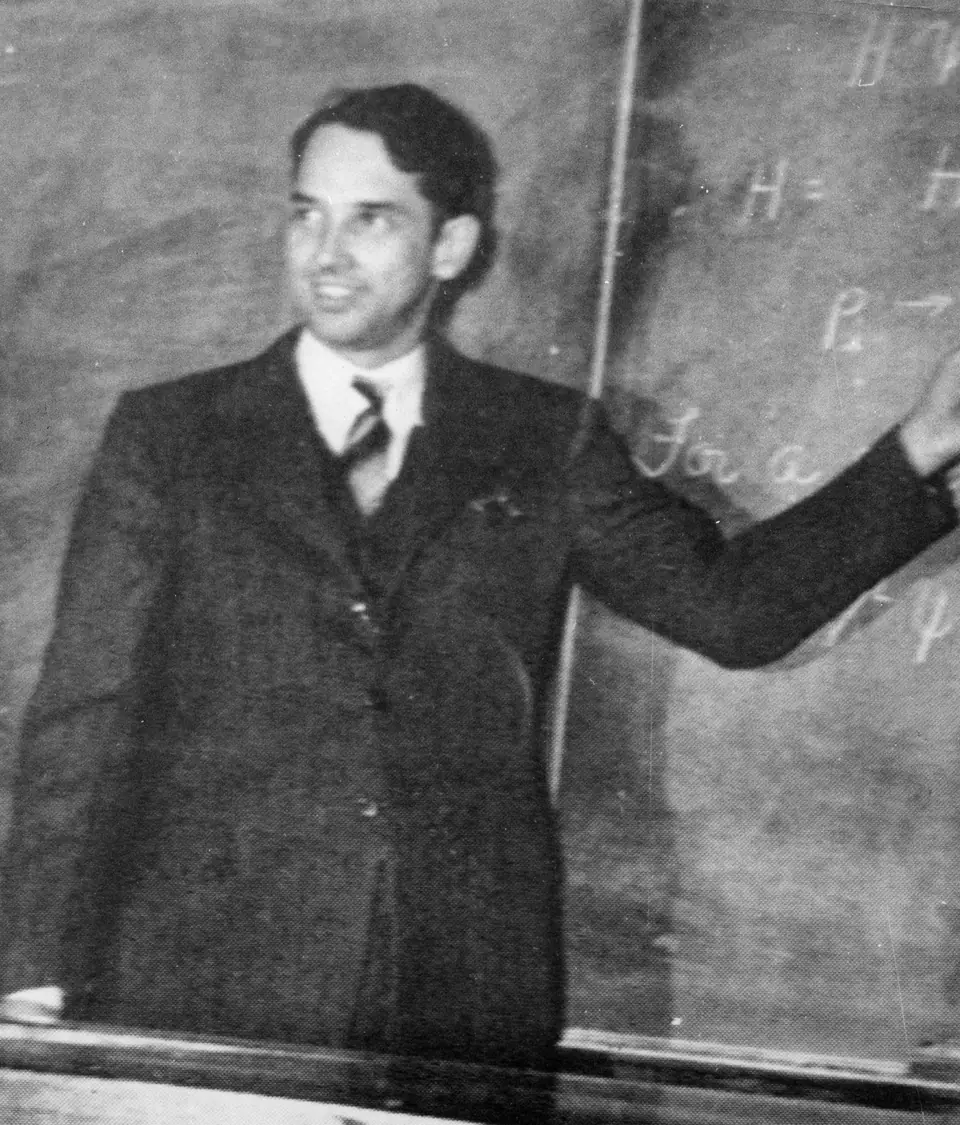
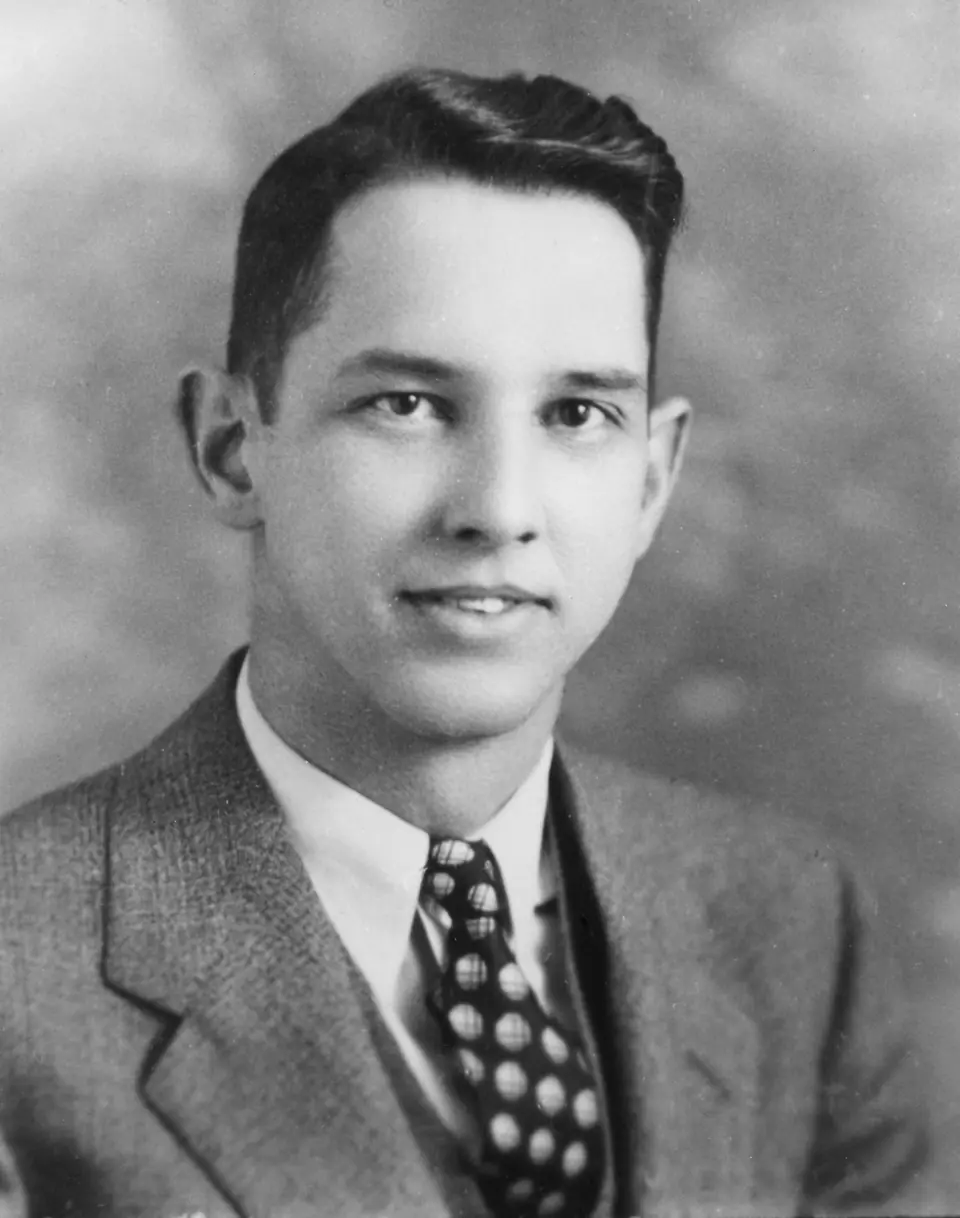
In the winter of 1937–1938, Atanasoff was searching for a way past the limitations of mechanical calculators. The technical problem had left him at an impasse. The solution did not arrive in the laboratory.
01 / THE IMPASSE
Calculations that take weeks.
As a physicist and professor, Atanasoff dealt with mathematical models requiring vast numbers of numerical operations. Available mechanical and electromechanical devices were slow, cumbersome and prone to errors during repeated calculations.
He began to imagine a machine in which both the representation of numbers and the process of manipulating them would be different. As winter passed, his frustration grew and work stalled.
02 / THE ROAD
Iowa. The Mississippi River. Illinois.
On a cold day, Atanasoff got into his car and drove for hours. He crossed the Mississippi River and reached the area around Rock Island, Illinois. At a roadside stop, away from distractions, his thoughts became clearer.
In later accounts, he recalled that several fundamental design decisions emerged there. This does not mean that a computer was invented in a single night: years of experimentation, testing and engineering still lay ahead.
03 / THE INSIGHT
Four principles instead of thousands of parts.
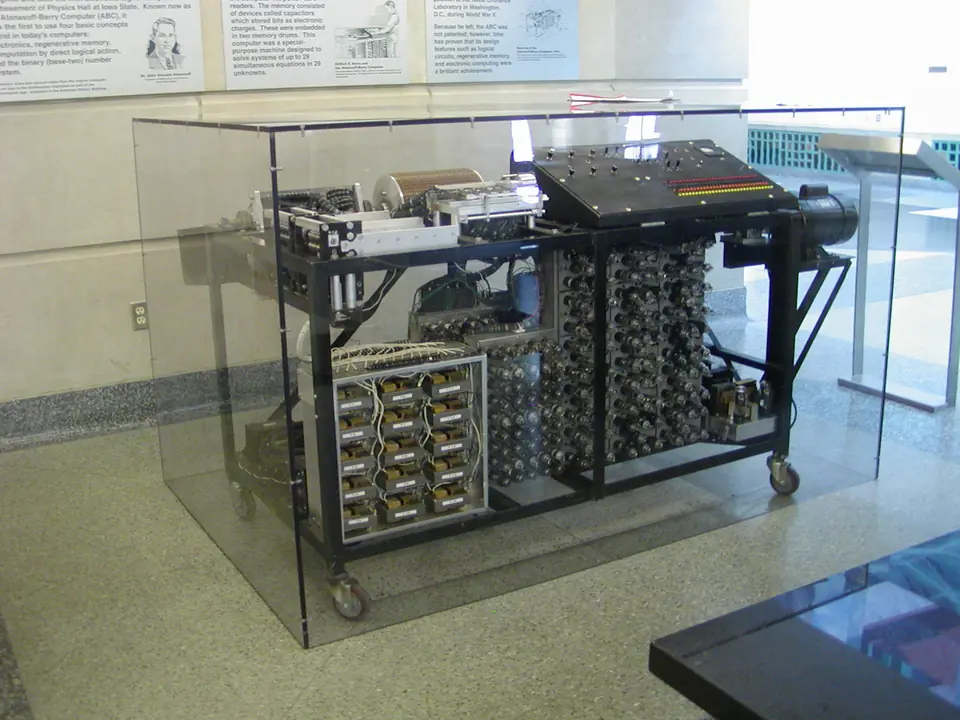
Atanasoff decided on electronic components for calculation, binary number representation, capacitor-based memory that would periodically refresh its charge, and direct logical operations.
These choices changed not only computational speed but also how a computing system could be organised. The hardest part remained: proving that the principles would work together.